
Thoughts on dog rescue (for other beginners)
Getting the “rescue bug”
I am not sure how it all started. When I decided to get a dog, I had no experience with rescue – all dogs in our family used to come from breeders. But I was in a different country, had no friends with dogs, and knew nothing about dog breeding landscape in Ireland. Actually, the more I looked into it, the worse it looked. I read about puppy mills, browsed online puppy selling marketplaces, and was irked – it all seemed either unreasonably expensive (1,500 euros for a puppy??) or kinda dodgy (two poor quality photos of badly groomed dogs of different breeds – why would anyone think it was a good idea to let them mate?). I realised that I had no ability to identify a responsible breeder. I also realised that I wanted a dog, but was not keen on a puppy, with all the mess and training they required (if only I knew how much training I was going to do with an adult dog – but no, I still would not have chosen a puppy, they are just not my jam). So, when my therapist, whose dog was adopted through Dogs Angels, suggested that I could adopt a dog from rescue, this seemed like an excellent idea.
I started looking through the dog rescue websites, getting more and more overwhelmed. At that stage I still knew almost nothing about the dog rescue world, but began to realise the extent of the problem – all these perfectly lovely dogs, waiting desperately for someone to adopt them. By the time we brought Sean home, I was lurking on rescue websites every day for two months (yes, I am an obsessive person), getting a happy boost from updates that another dog has been reserved.
But it probably was the algorithm ™ that ended up fully converting me. When I started following Dogs Trust on Instagram, my feed started to fill with dog rescue content. I discovered dog fostering influencers, people who worked in shelters, and dog rescue organisations around the world. I loved what they were doing and wanted to do similar things. Simultaneously, I was observing the impact of a long stay in a shelter (luckily, one of the best in the country!) on my own dog’s nervous system. He was so stressed. He forgot how to do simple dog things – follow a scent in the grass, chew a bone, kick back his legs after going to the toilet. The more I was reading about dog behaviour in attempt to deal with Sean’s reactivity, the more I understood that dogs needed families and were poorly suited for living in a kennel environment. I could not look away anymore.
All dogs are good enough dogs
When I started following dog fostering accounts, some of my stereotypes and preconceptions were completely shattered. Again and again, I would look at someone’s foster dog and think “Surely, nobody is going to want this kind of dog, when there are so many better options available”. Every time I was proven wrong. Apparently, there is no dog too old, too sick, or too ugly to be adopted – if you give them enough exposure, miraculously people come who fell in love with this dog and want to spend their time caring for him or her. Of course, many dogs do not live to see this happy ending, but it is not because something is fundamentally wrong with them, they just happen to be in the wrong place at the wrong time.
What I realised is- dogs are fundamentally lovable, this is their main evolutionary trait. If you spend enough time with them, you will start loving them – even if they are the wrong breed, age, sex, and colour relative to your imaginary perfect dog. Jean Donaldson in one of her books tells the story how she took a Chow Chow puppy (the breed that she had absolutely no interest in) as a foster and flippantly said that she would never foster fail with her, because “She is a Chow”. Famous last words:) Buffy stayed with her forever and converted her into a Chow lover.
This means that almost only two relevant variables in chosing the dog are temperament and exercise needs: do you vibe with this dog and can you provide them with a fullfilling life? Of course, the problem here is that a dog’s behaviour and temperament in the shelter environment can be VERY different from their behaviour at home, and that works both ways: the dog can be very quiet and then go berserk once she feels safe at home, or they can be hyper in the shelter and settle into a calm and relaxed dog once the stress is gone. This is why fostering saves lives – by showing the true nature of a dog and allowing for a good match with an adopter.
Small dogs are dogs too
Similar to many people, I has always been prejudiced against small dogs, thinking them yappy, ill-tempered and stupid. Our family dog was a Mittelschnauzer (standard schnauzer) and we looked down our noses on Zwergschnauzers (mini schnauzers), thinking of them as a kind of under-bred version of a real dog for those who want a lapdog with a beard.
This opinion has not improved when we got Sean, who turned out to be much more nervious about small dogs then large dogs. I am guessing that their defensive barking and scurrying around makes him uncomfortable – he likes calm, predictable dogs who pay no attention to him. In addition, small dogs often have no manners: because they are “harmless”, their owners do not consider aggressive barking, lunging and running up to other dogs a problem (if a rottweiler had behaved like this, they would have been labeled a “dangerous dog out of control”, but with a maltese this is called “haha, he is feisty”). Small dogs are also more likely to sit all day at the windows barking madly at passing dogs, which scares Sean (who likes when someone suddenly shouts abuse at you?!)
Anyway, with all this baggage I arrived to volunteer at Dogs Aid sanctuary – and met a lot of small dogs. And while some of them were exactly like I thought (I am yet to warm up to a maltese or a chihuahua), mostly they were just… dogs. Same animal with a need for respect, affection and enriched life – just in a smaller body. In contradiction to what I just just wrote about small dog priviledge, I started to think about small size as a disadvantage, because: 1)nobody takes you seriously, 2)everyone is big and scary, and 3)people are more likely to treat you as a live toy, because you are cute and tiny. So, small dogs are relentlessly (wo)manhandled and are thought to not have any serious exercise needs (“walk around the block on extendable lead would do”). No wonder they are frustrated, bitey and barky. And do not even get me started on overfeeding them.
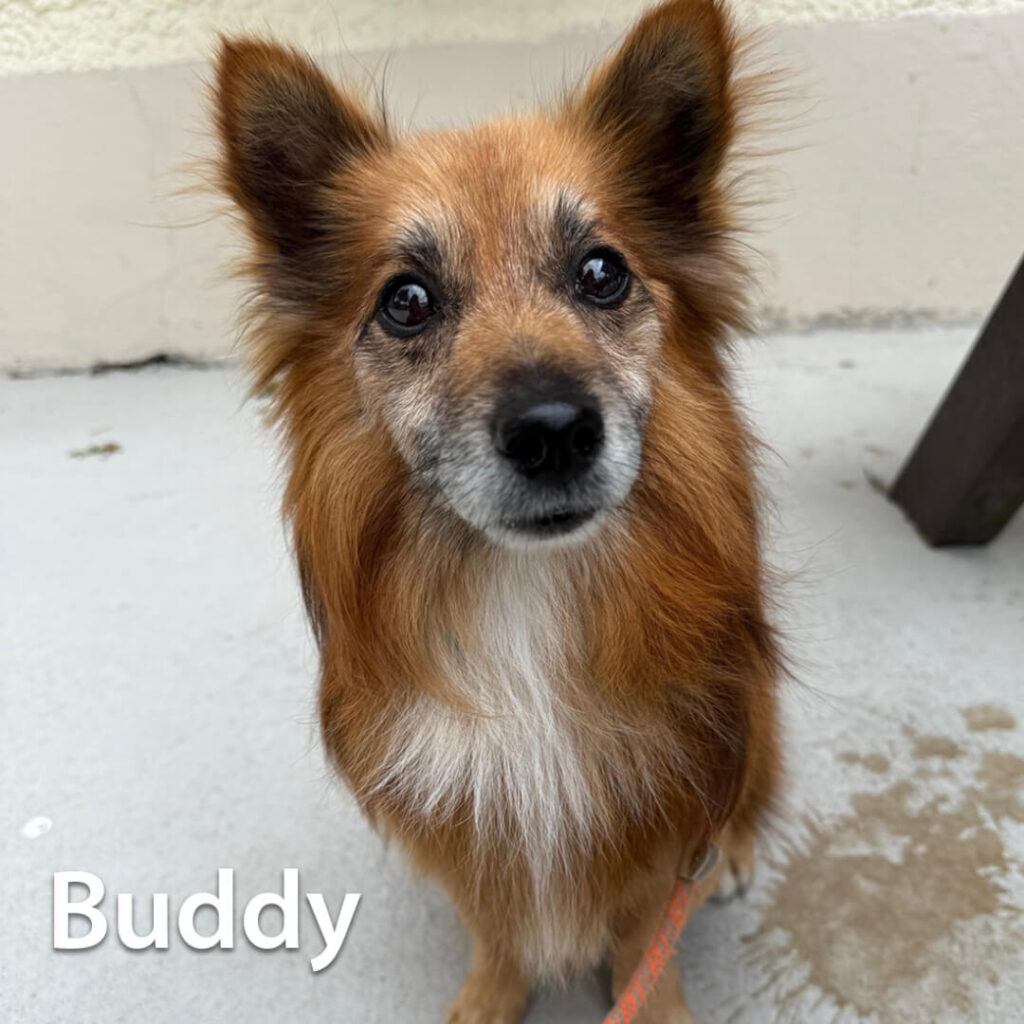
The photo is of a pomeranian mix Buddy, who is the most amazing little dog. If I did not have a dog-reactive male dog at home, I would be at the very least fostering him (with a full intention to foster fail). I am so in love with him – he is just a sweetest senior boy.
Your dog skills are context-specific (surprise, surprise!)
Volunteering at a shelter has been a truly humbling experience in many ways, but especially in relation to my opinion on my own dog handling skills. After turning a pretty nervous shelter dog into a very sweet and manageable boy (I do not like the word “obedient”, because terriers do not really do “snapping your heels at your master’s command” kind of obedience, but you can always negotiate with him or, in the worst case scenario, just do stuff to him and he would not object), I was a bit proud of my skills and my understanding of dog behaviour. My skills certainly worked with my uncle’s anxious Bernese, who is scared of all strangers, including my mom, who lives next door and visits literally every day. Within days of me ignoring her, not looking at her and generally being non-threatening, she was calmer around me, and with some simple food reinforcement allowed me to gently pet her (it is sooo easy when a dog is food motivated).
But then I started handling dogs in the shelter environment – and it turned out to be a very different ball game. In the shelter, you rarely know upfront what each dog is going to tolerate, and when they would start biting. But you can bet that all of them are stressed, and so less tolerant to handling and less likely to show warning signs before going for a bite. You quickly learn not to grab unfamiliar dogs by the collar. You have no rapport with them, so they are not going to listen to anything you say, especially when they are barking and jumping around in the kennel. Getting them out for a walk becomes the whole ordeal, because you need to open the kennel door wide enough to put a slip lead on the dog (who actively dodges it even with the treat on the other side) but not too wide so the dog can slip by you (my biggest fear so far – especially given that other dogs go mental when they see a dog pass by their kennel). Slip leads rarely fit perfectly, so you often need to hold them and adjust, hoping that the wriggling dog will not slip out of it and will not bite your hand which is doing something potentially unpleasant at her neck. Then comes putting on the harness – again, too much handling by strangers than I would consider comfortable for a stressed dog, so lots of treats are involved. This sometimes makes the dog even more hyper – my friend lurcher Todd, for example, goes bananas at the sight of food and tries to get to the treat jar. He is a tall lad, so you need to wrestle him down before he has swiped everything from the table in the lobby:) Good thing he is also a sweet boy, so allows all this coercion.
After you got a dog out for a walk, you hope that they are not going to have any funny ideas about the leash (that was never a problem with any of the dogs I knew in home environment). Biting the leash is not a big problem with a small dog, especially one that can be distracted by treats or toys. It is, however, a HUGE problem with a big powerful dog like a Malinois or a German Shepherd, who can chew through the leash in minutes. I had a very stressful 15 minutes with a Mali (whom, on reflection, I should not have agreed to take out, since we knew nothing about his behaviour), who, 3 minutes into the walk promptly chewed through the slip lead and started on the main leash. He was not interested in the treats or toys, he just wanted to chew (and possibly, get rid of me pulling him around the next somewhere). I was lucky that I managed to run him back into the kennels (with him chewing and jerking the leash all the time) and close the door behind him before he finished with the second leash. I will not be taking Malinois (or any big mouthy dog) out until I get some professional training in handling those situations. I am currently doing the course with Ani-Ed, which will hopefully give me some much-needed skills.
Does a drop in an ocean count? (Or – fighting the “all or nothing” mentality)
For me, one of the biggest challenges in rescue volunteering is to know how much time and effort I can give without overcommitting and getting overwhelmed, and yet feel that I have done something useful. Rescue needs are like a giant black hole – there is ALWAYS more that needs to be done, more animals to save, more and better care to provide.
Rescues are led by passionate people who work 24/7 – relative to them, you always look like a slacker, like you are not taking this seriously. When I started to volunteer, I always had (and still have) a feeling that everyone else does more, stays longer hours, looks at me funny when I leave after an hour or two. The truth is that a)they probably don’t care what I do, b)those who can spend the entire day in the rescue probably have few other family commitments, and c)I contribute as much as I can, and there is no option for me to do more. I suspect that few of the volunteers that I meet in the rescues have kids or high-maintenance dogs at home. I know for sure that many young people come to work with rescue dogs because they cannot have their own pets (due to landlords not allowing them) and they miss the interaction with animals. And here I am – coming to walk rescue dogs after I have already walked my own for more than an hour, and leaving my partner to do another hour+ dog walk in the middle of the day (and another, shorter one, in the evening). 16,000 steps is quite tiring – and that was just me yesterday walking my dog once + two rescue dogs, plus doing the usual household chores.
I have to remind myself constantly that, for two dogs whom I walked yesterday, these walks made a big difference, allowing them to sniff, decompress, do their business outside of the kennel. And for other people in the rescue – that was two dogs they did not have to walk, two checked boxes on the whiteboard, the hour (or more) that they could spend doing something else. So, yes, I keep telling myself that every drop in an endless ocean counts.
The flavours of rescue volunteering
When you come to the shelter and see the dogs, your (or at least mine) overwhelming desire is to bust them out of there. All of them. Even the ones that look like aggressive psychos and the ones that look like a result of multiple genetic mistakes. But you cannot, and this is a constant source of heartbreak.
Why do I bother driving 30 minutes each way of Sundays to spend two hours in a dog shelter*? If time is such a precious resource for me – and it is, I have a full time job, a partner who would like to spend time with me occasionally, a dependent young adult, and a dog who needs active attention at least 5 hours each day – why not help remotely?
In the ideal world, I would prefer to foster dogs instead of caring for them in a stressful shelter environment. Fostering has so many benefits (obviously, for the dog, but also for a fosterer):
1) you are in your own space, where you have full control over resources – if you need a different kind of treats or a well-fitting harness, you just go and get it, instead of hoping that the rescue has it. You do not have to ask for permission, you are responsible for your actions (if a dog has an upset stomach because of the treats you gave, you will clean after them yourself instead of other volunteers having to do it next day and cursing you silently).
2) you have as much time as you need – you can take things slow, instead of forcing a dog into situations they might not be ready for. You can observe the dog in a low-stress environment, to understand better what they prefer.
3) you can create calm spaces and let the dog decompress – an impossible task in the kennels. This increases probability of positive moments (such as cuddling) and reduces probability of negative moments (such as biting or running away). Everyone is happier.
4) you have the same dog all the time, so you can actually bond with him/her. I am not sure how much you can bond with a dog whom you see for 40 minutes once a week.
However, I do not live in an ideal world and I do not have necessary conditions for fostering: a dog who tolerates other dogs, a buy-in from the rest of the family, and a job that does not require me sometimes to be in the office full day (I also work in a different county, so commute takes 2-3 extra hours). Another stay-at-home option is to give rescues money – I do that, to some extent, on a regular basis, but it does not scratch the itch for me. I want to be hands on with the dogs, because dogs are social animals and need people who love them. Even well-fed and healthy dogs in warm kennels with toys (things money can buy) will feel depressed if nobody comes to interact with them. You can also be a keyboard warrior and like, share, promote the posts about rescue dogs, in the hope that someone sees them and decides to adopt them.Unfortunately, this is only valuable if you have extensive networks within the country. This is not my case – I have very few connections in Ireland, and promoting Irish rescue dogs to people in other countries is a fairly pointless activity. They might like the pictures of cute doggies but they are not going to ship them to Lithuania or Bulgaria or France. I still occasionally post the pictures of dogs I meet in the shelter, but I am conscious of the low impact of this activity.
So, this leaves me with the only viable option – to take precious time out of my weekend and go to the shelter. How I use my time there is another question – because the cost of this time is so high, I really want to make the most out of it, both for me and the for the dogs. The first shelter I volunteered at required the volunteers to clean the kennels and then, perhaps, walk some of the dogs and spend some time in the yard with the other dogs. At the one I am volunteering now, the main staff do the cleaning, so I just walk the dogs (usually, just one or two). I am also supporting their enrichment programme – since I can spend little time at the shelter and cannot interact with more difficult dogs, I thought of other ways to support dogs’ welfare. I bought a bunch of kongs and now run a weekly rotation, bringing a fresh batch of stuffed frozen kongs every Sunday and picking up empty ones. This gives the shelter another option to entertain the dogs who are stuck in kennels and give them an outlet for natural behaviours – licking and chewing in search of food.
*even if they are called a “sanctuary”, or a “rescue”, they are still ultimately a dog shelter – a holding space for dogs who do not have their people